← Back to blog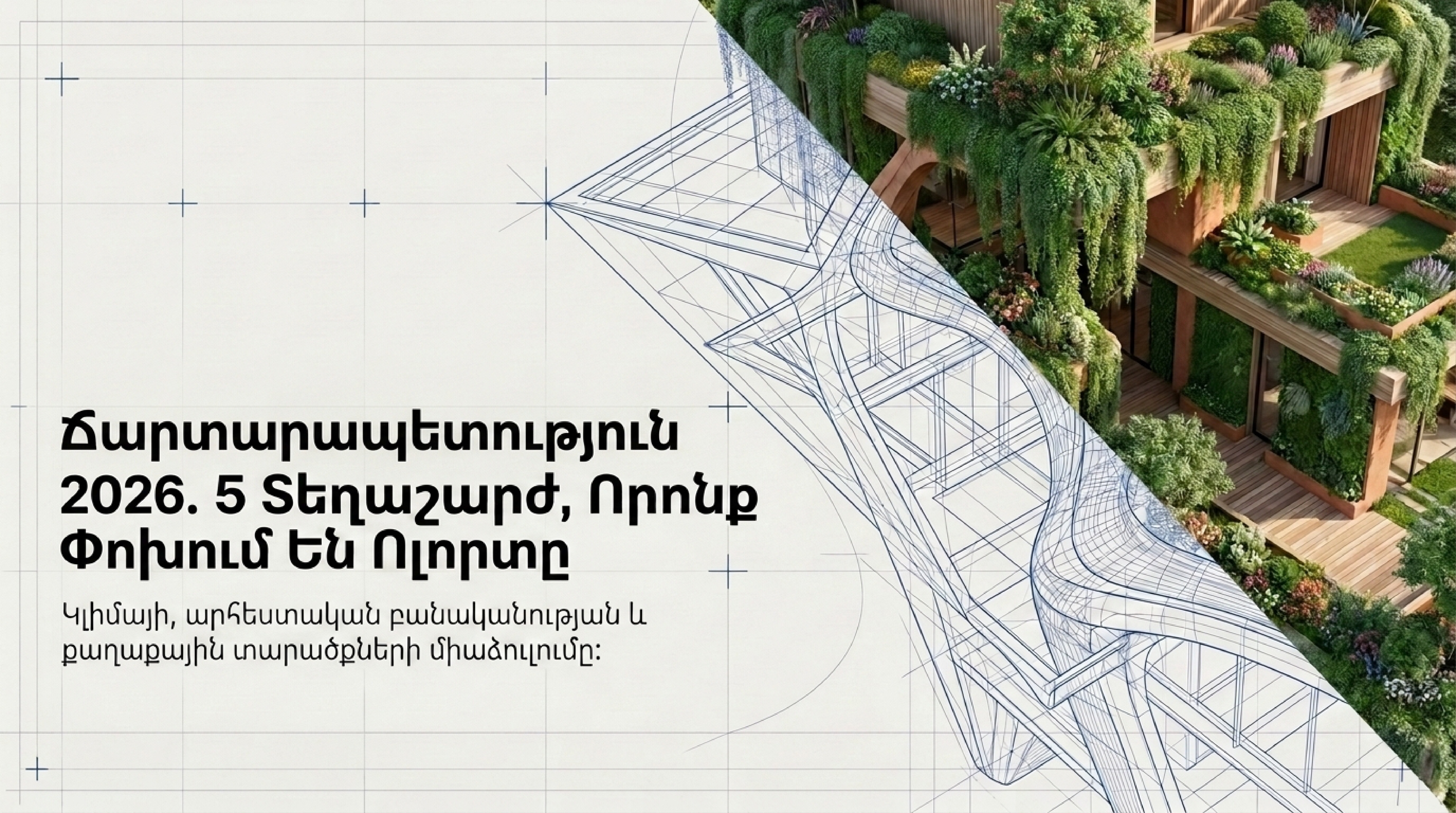
May 12, 2026
Architecture 2026: Five shifts changing the profession
May 2026 finds the industry at a convergence point — where the climate imperative, artificial intelligence, and a fundamental rethinking of urban space are merging into a single vector. Here is what is happening right now, and why it matters for everyone who builds and lives.
Every architectural cycle begins with a question the profession cannot avoid. In 2026, that question is: how do we create buildings that don't merely exist, but actively participate in the life of a city, a climate, and a person? The answer is unfolding across several fronts simultaneously — and none of them are theory anymore. These are real projects, real materials, real tools.
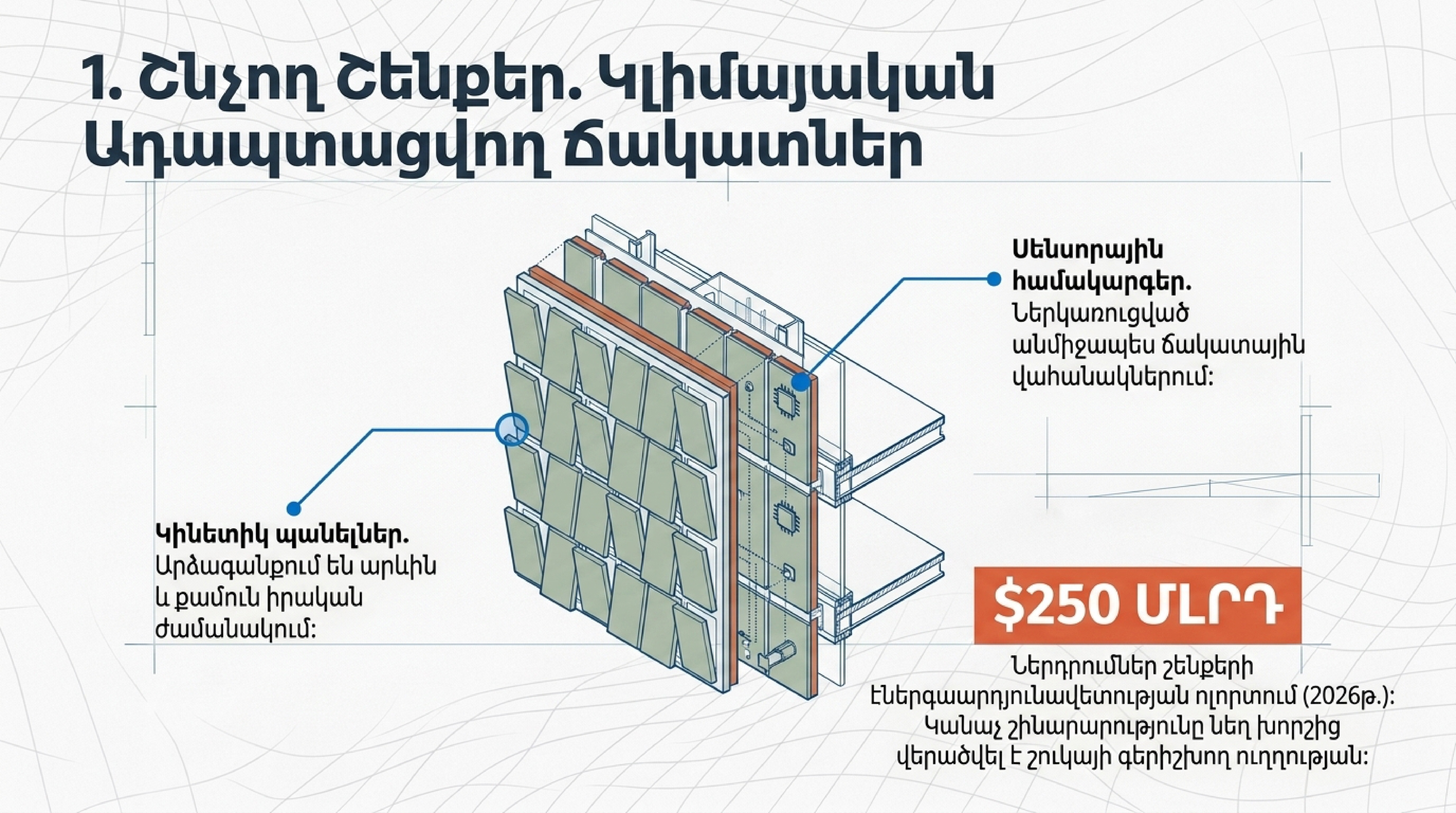
1. Climate-Adaptive Facades: Buildings That Breathe
Parametric architecture is no longer the privilege of large international firms. Studios in Lagos, Seoul, São Paulo, and Stockholm are using parametric tools to generate context-responsive buildings at a pace that would have seemed absurd five years ago. Kadva Corp
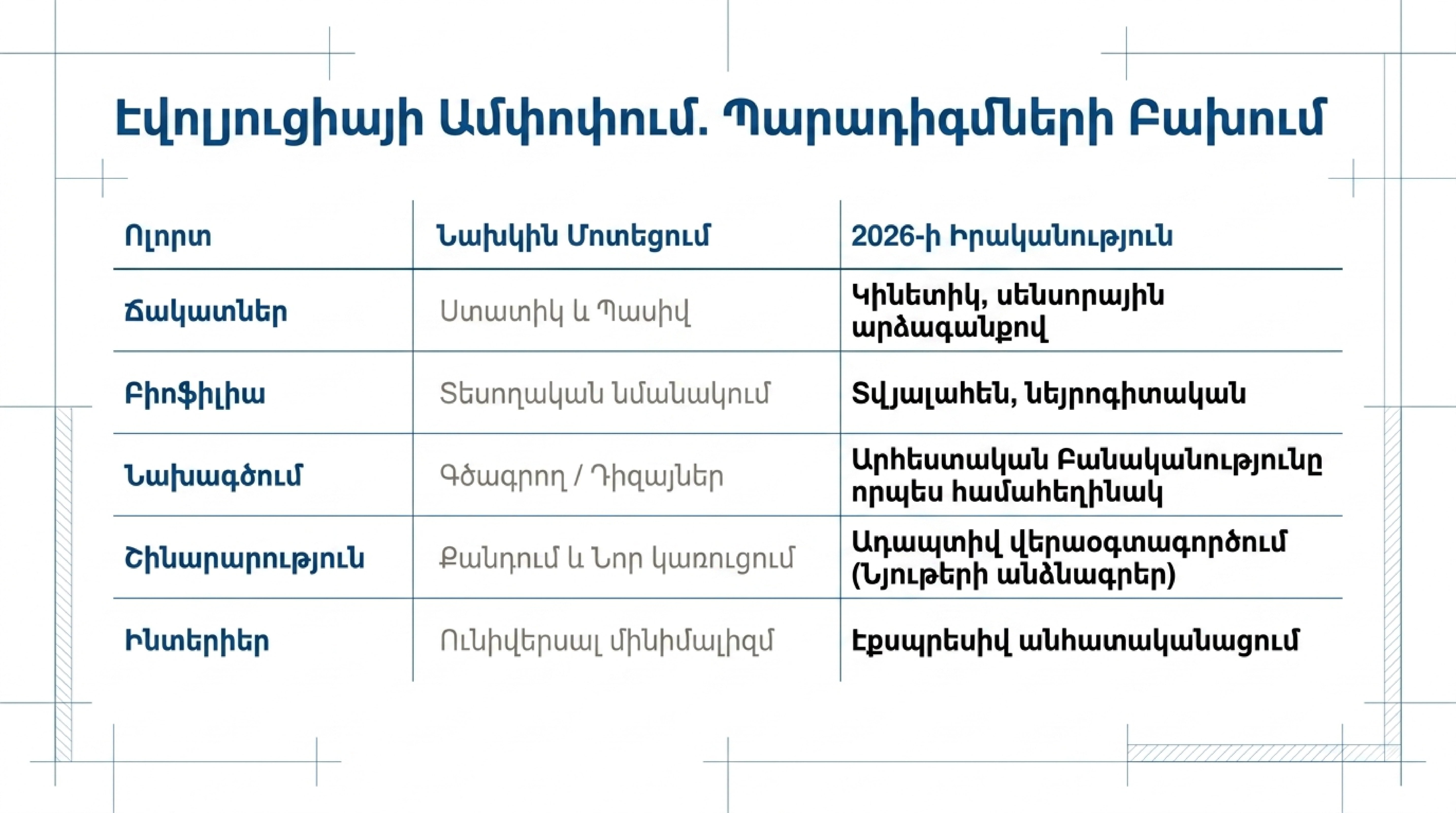
One of the most significant shifts is the emergence of kinetic facade systems — exteriors that respond in real time to solar gain, wind direction, and humidity, with environmental sensors embedded directly into facade panels. These are not concepts. They are built commercial projects.
Investment in building energy efficiency reached $250 billion in 2026 — a figure that makes clear green construction has moved from a niche concern to the dominant market direction. QZY Models
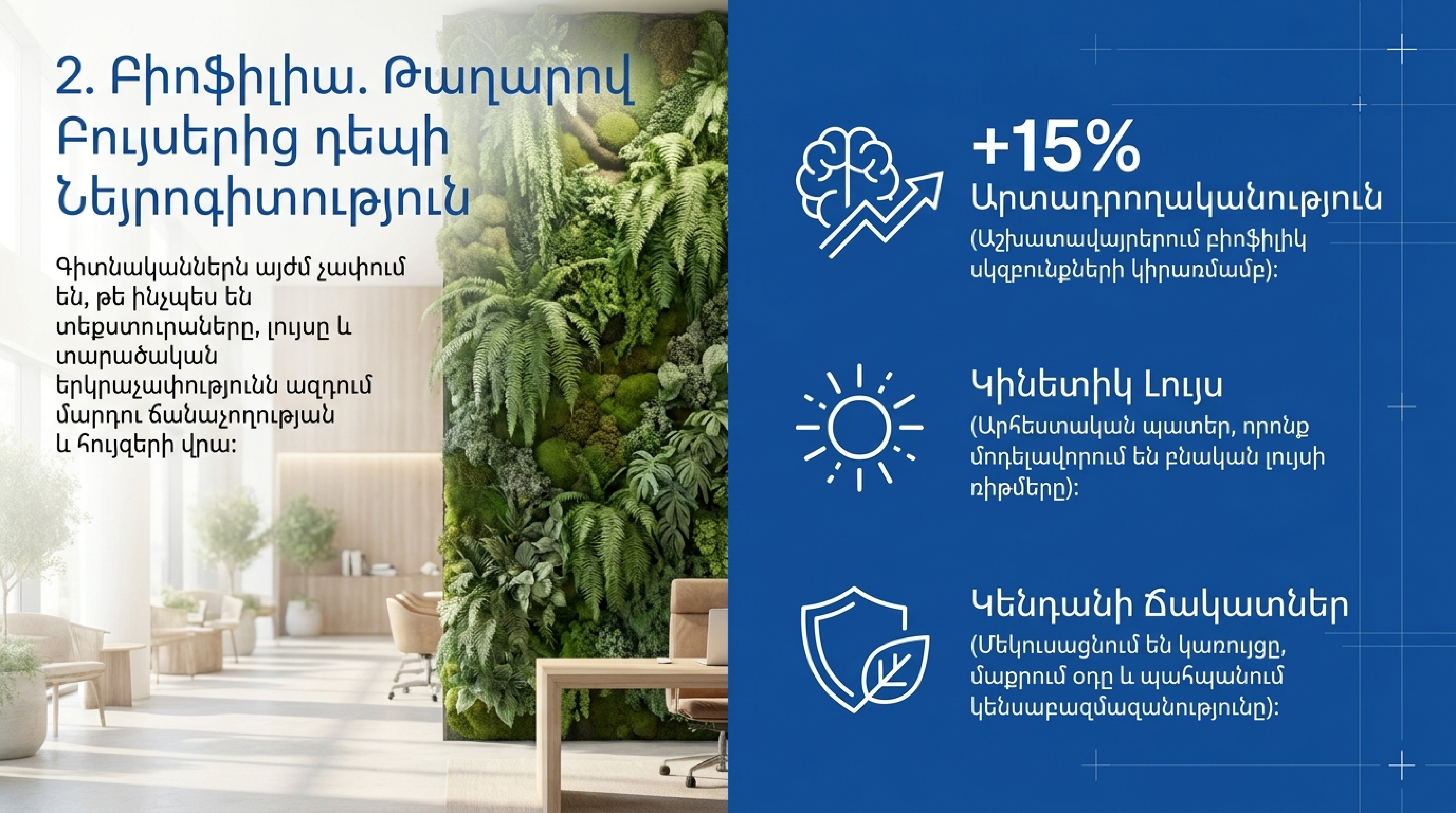
2. Biophilic Design: From Concept to Neuroscience
Potted plants in the lobby are a distant memory. Biophilic design has evolved from visual imitation of nature to a data-driven approach rooted in neuroscience: researchers now map how textures, light, and spatial geometry influence human cognition and emotion. Experiments include kinetic walls that simulate natural light rhythms and multisensory environments integrating scent and sound to foster relaxation and focus. IEREK
In 2026, the question is no longer whether biophilia improves wellbeing — that is established. The question is precisely how, and to what degree. Buildings are acquiring living walls and roofs: entire facades covered in vegetation that simultaneously insulates the structure, purifies the air, and supports biodiversity. Offices implementing biophilic principles see productivity gains of up to 15% and lower rates of absenteeism. QZY Models
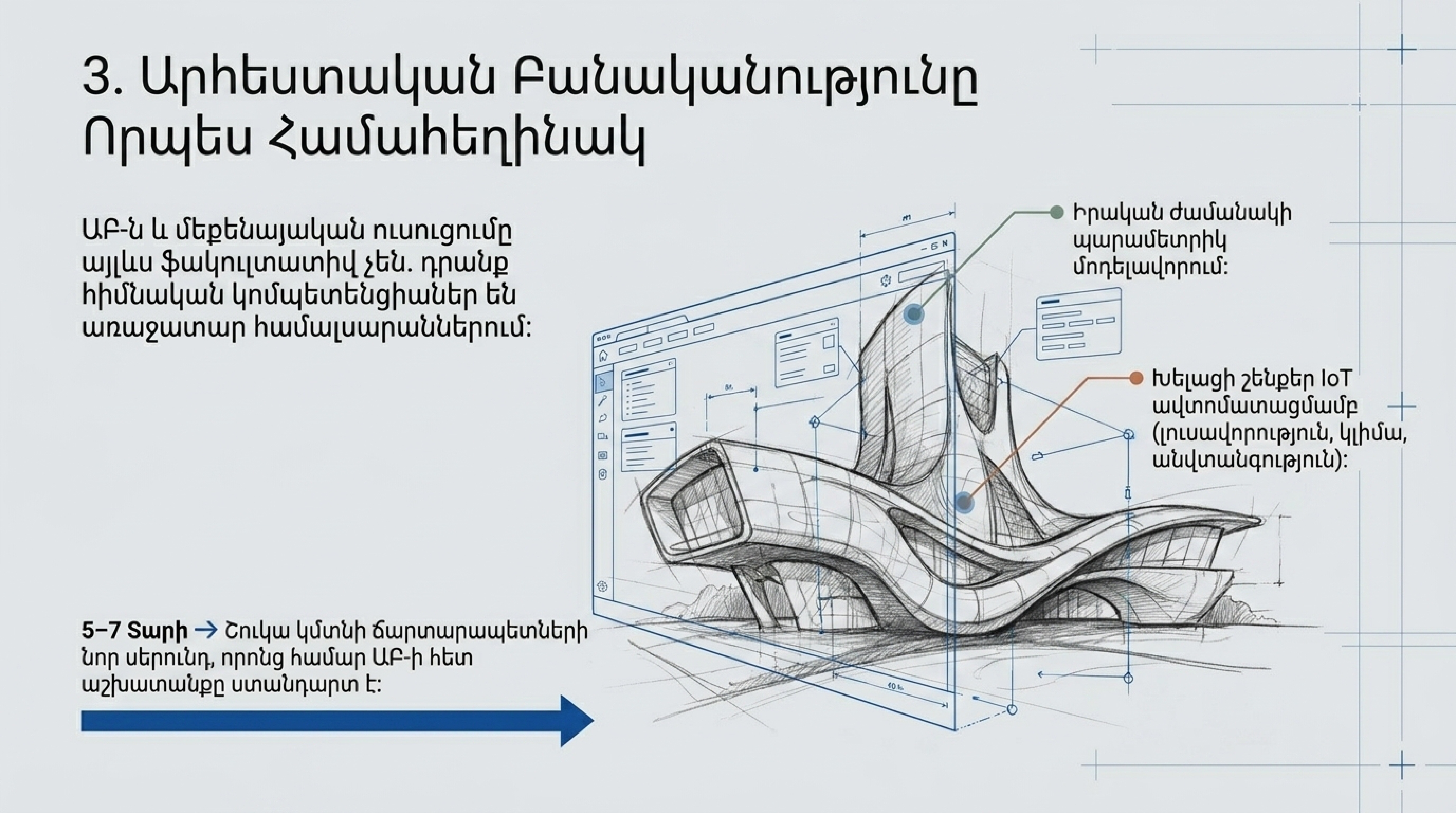
3. Artificial Intelligence as Co-Author
Leading architecture schools are restructuring their programs around integrated AI and machine learning literacy — not as electives, but as core competencies embedded across studios and technical courses. This means that within five to seven years, a generation of architects will enter the market for whom collaboration with AI is standard practice, not an experiment. Kadva Corp
Already today, BIM software, parametric modeling, and real-time visualization tools are streamlining design processes. Smart buildings use IoT and automation to manage lighting, climate, and security — doing so far more efficiently than any conventional building management system.
4. Adaptive Reuse: The Best Material Is the One Already There
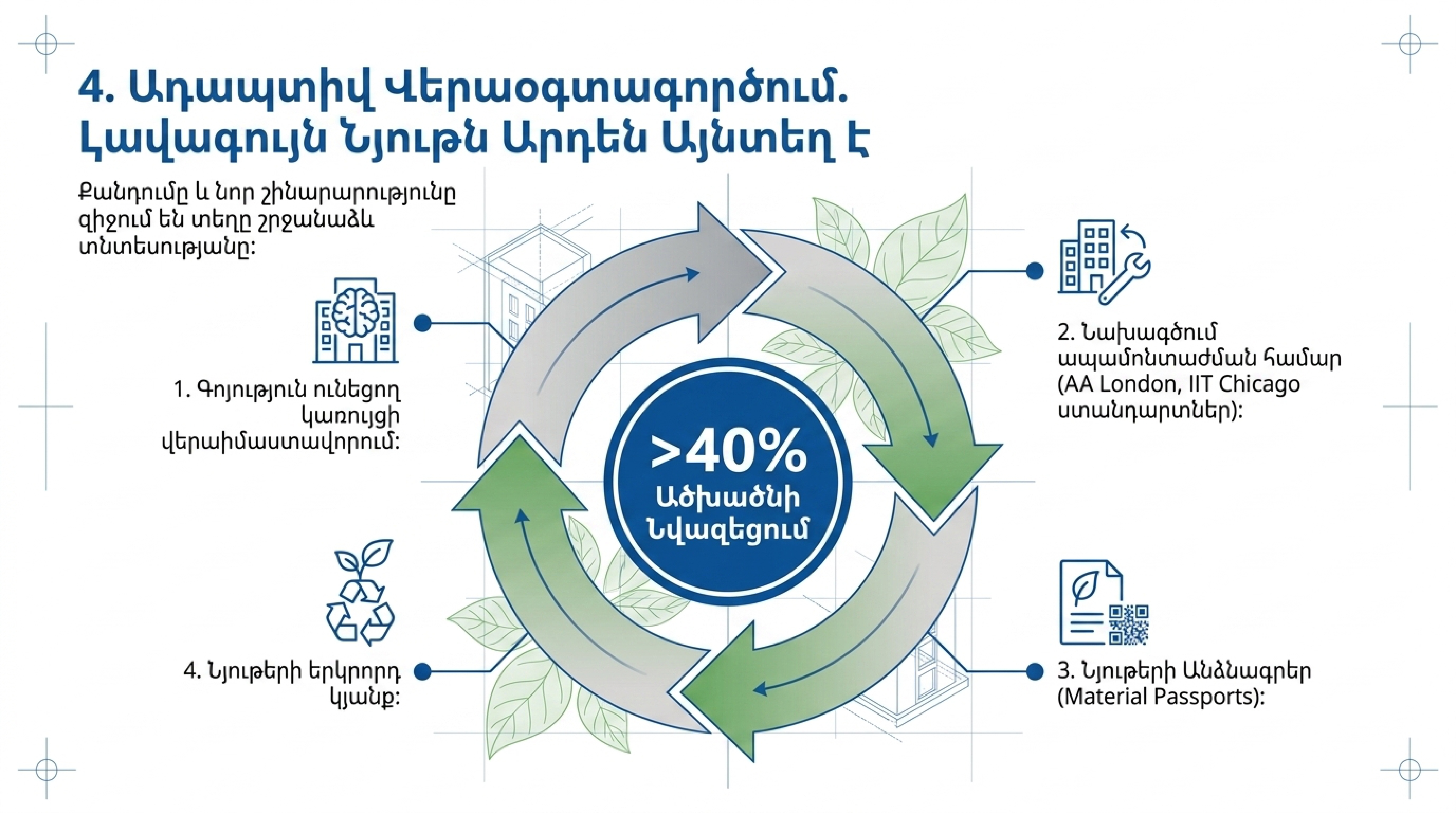
Demolition and new construction are giving way to the reimagination of existing structures. The reason is straightforward: reusing existing buildings lowers embodied carbon by over 40%, preserves heritage, and supports a circular economy. QZY Models
Designing for deconstruction, material passports, and adaptive reuse are now part of the standard vocabulary at schools from the AA in London to IIT in Chicago. This fundamentally changes how a brief is approached from the outset: a building must be designed not only for its operational life, but for future disassembly and the second life of its materials. Kadva Corp
5. Personalisation: The End of Architecture for Everyone
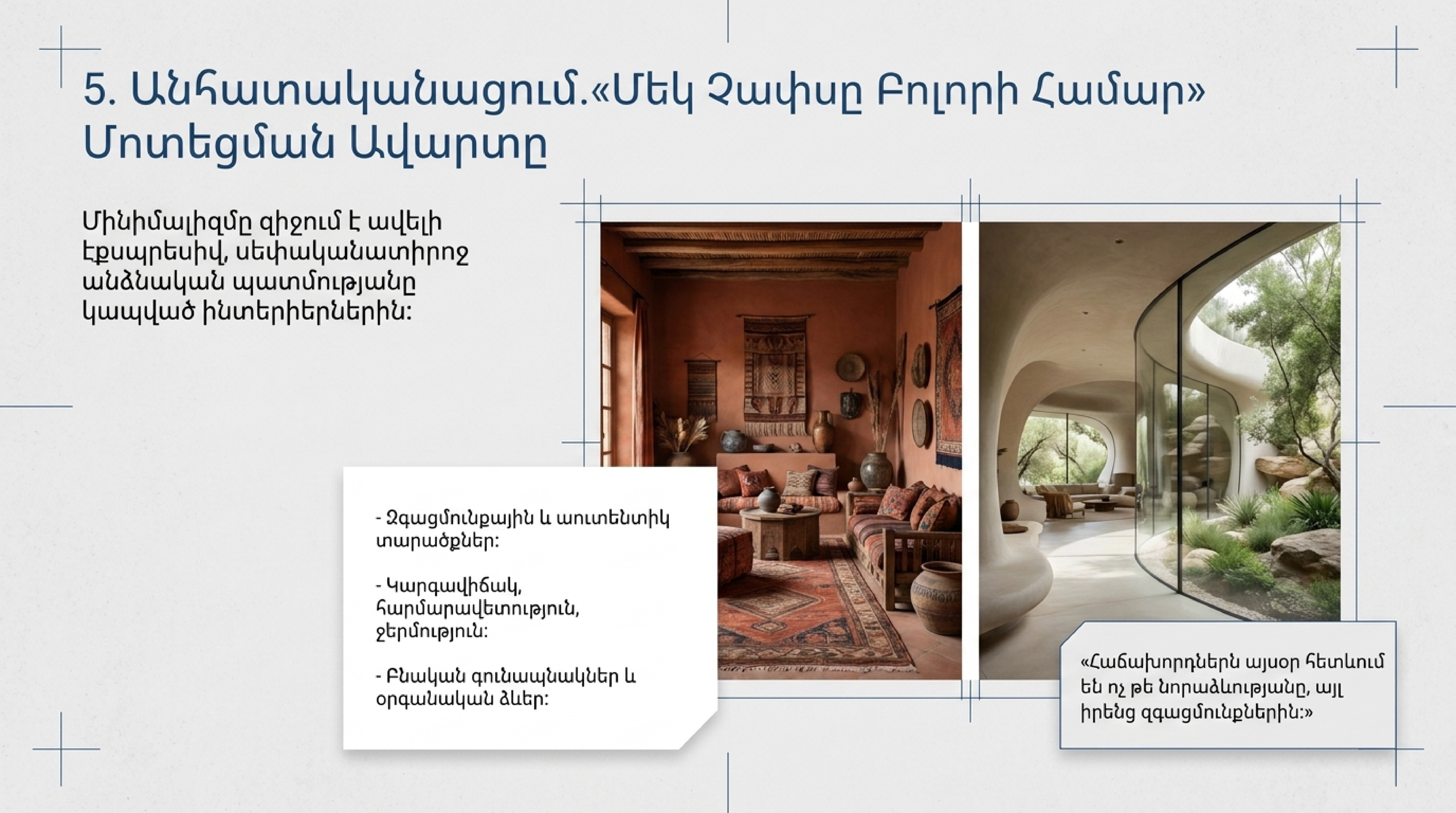
Through 2025, minimalism gave way to more expressive interiors connected to the personal histories of their owners. This wave of maximalism and craftsmanship is driven by a growing demand for emotional and authentic spaces. Geometrium School
Today, clients follow not fashion but their own feelings. What genuinely matters is comfort, warmth, and status — a residence must reflect its owner. This is timeless architecture that remains relevant regardless of shifting design currents. Alongside this, a new appreciation for natural palettes and organic forms is emerging: buildings with flowing contours and elongated proportions that create a sense of unity with the surrounding landscape. Studia 54
What This Means for Us
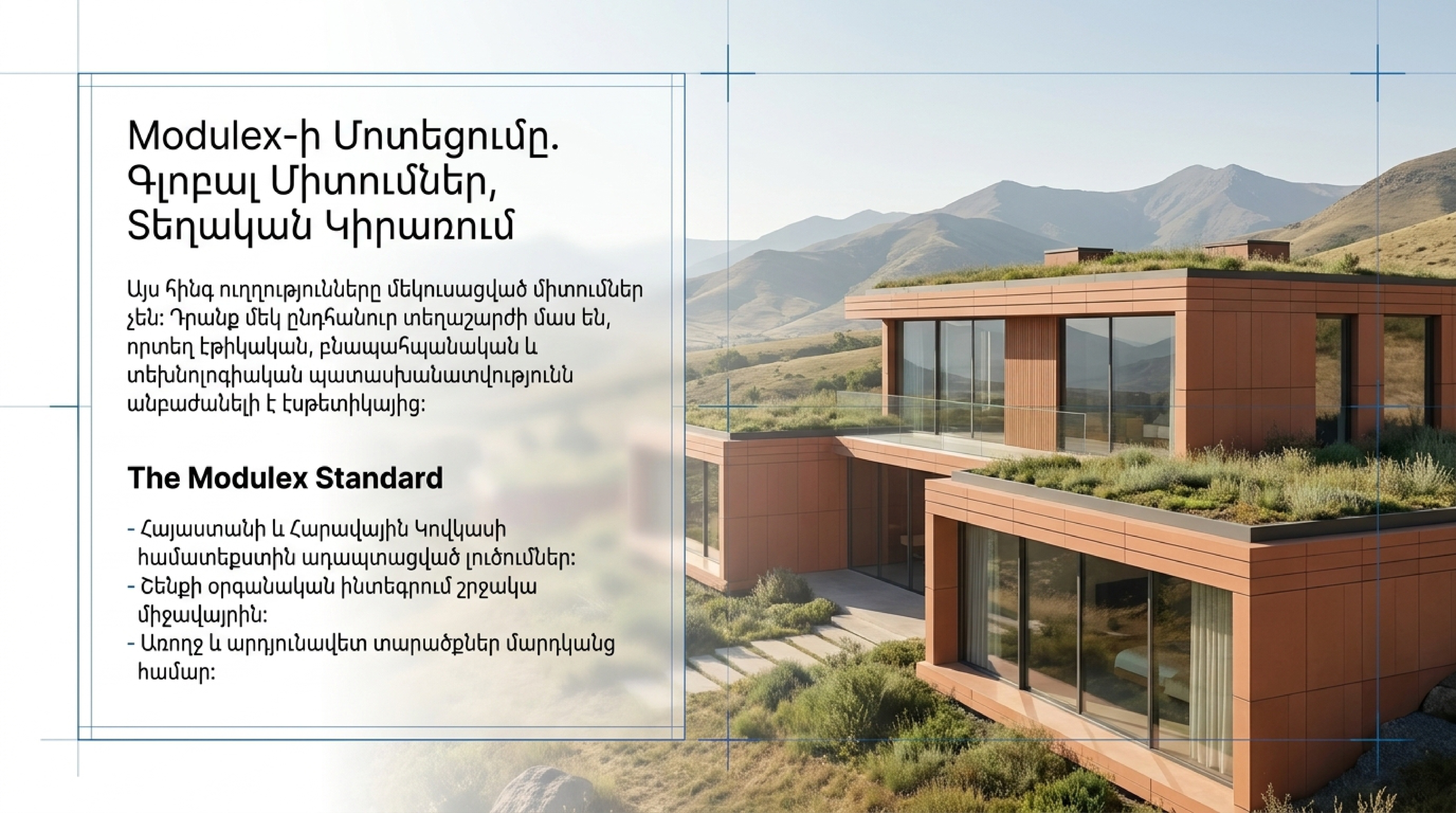
These five directions are not isolated trends — they are facets of a single broader shift: architecture is becoming a discipline where ethical, environmental, and technological responsibility is inseparable from aesthetics. For Modulex, this is not an abstract thesis but a working framework. Every project, every modular solution, is ultimately a question about how a building exists within its context and what it gives to the people inside.
Stay tuned to the blog — we continue to follow how the world's architectural thinking reaches us, here in Armenia and across the South Caucasus.